What is Leverage and Margin in Forex?
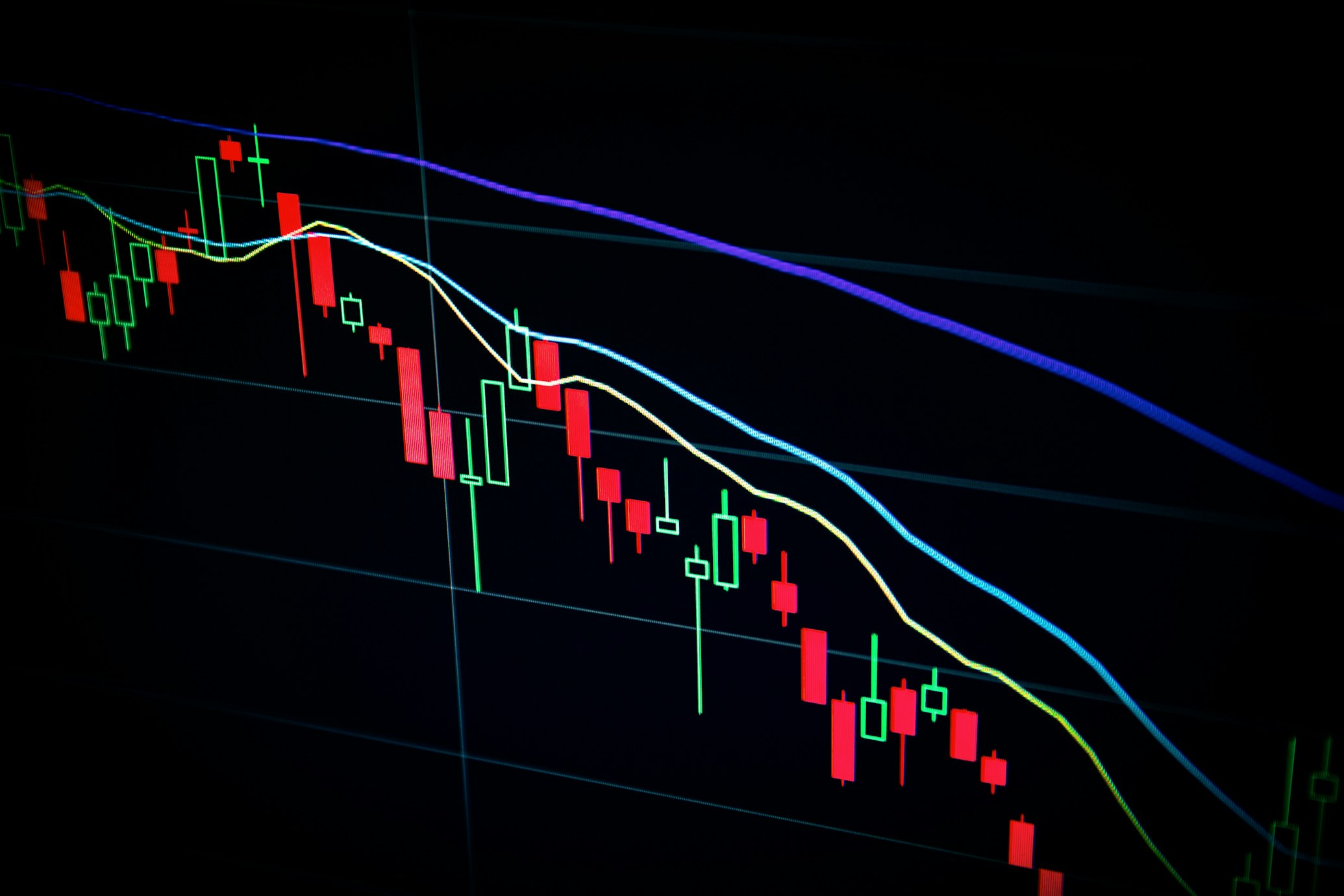
Between 70-80% of retail CFD accounts lose money — and excessive leverage is the single biggest reason why. Leverage and margin are arguably the most misunderstood concepts in retail forex trading. While they offer the allure of massive returns from small initial deposits, they are also the primary reason why over 70% of retail traders lose money. In this comprehensive masterclass, we will dissect leverage and margin from an institutional perspective, providing you with the exact risk management frameworks used by professional prop traders and hedge funds.
Written By
ForexRater Research Team
Data-driven broker comparison · Independently tested · No paid rankings
Reviewed against our published methodology →Reviews represent the editorial opinion of ForexRater and are not personal financial advice.
Key Takeaways: Leverage & Margin Explained
Leverage is a credit facility from your broker, shown as a ratio like 1:30 or 1:500, letting you control a large position with a small deposit — a $1,000 deposit at 1:100 controls $100,000.
Margin is the collateral locked to keep a leveraged trade open, calculated as (Trade Size / Leverage) × Exchange Rate. It is frozen equity, not a fee, and is released when you close the position.
Leverage multiplies profits and losses equally. On one Standard Lot of EUR/USD each pip is worth $10, so a 100-pip adverse move wipes out a $1,000 account.
A margin call triggers near 100% margin level; a stop-out near 50%, when the broker automatically closes losing positions to prevent a negative balance.
Retail leverage is capped by regulator: 1:30 on major pairs in the UK/EU (FCA/ESMA), 1:50 in the US (CFTC/NFA), 1:30 in Australia (ASIC); offshore brokers may offer 1:1000+ without negative-balance protection.
Professionals decouple leverage from risk: position size is set by the 1% rule and stop-loss distance, never by the broker's maximum leverage.
What Is Leverage and How Does It Work in Forex?
In traditional stock trading, if you want to buy $10,000 worth of Apple shares, you generally need $10,000 in cash. In the foreign exchange market, currency pairs move in microscopic fractions called "pips" (Percentage in Point). Because these daily movements are so small (often less than 1%), trading without leverage would yield negligible returns.
Leverage is essentially a credit facility provided by your broker. It allows you to control a large position in the market with a relatively small amount of your own capital. It is expressed as a ratio, such as 1:30, 1:100, or 1:500.
* 1:1 Leverage (No Leverage): You control $1 for every $1 in your account.
* 1:100 Leverage: You control $100 for every $1 in your account. A $1,000 deposit allows you to trade up to $100,000 (1 Standard Lot).
* 1:500 Leverage: You control $500 for every $1 in your account. A $1,000 deposit allows you to trade up to $500,000 (5 Standard Lots).
While controlling $100,000 with just $1,000 sounds empowering, it fundamentally alters your risk profile. If you buy 1 Standard Lot ($100,000) of EUR/USD, every pip movement is worth $10. If the market moves against you by just 100 pips (a typical daily range), you lose $1,000—wiping out your entire account.
What Is Margin and How Is It Calculated?

If leverage is the multiplier, margin is the collateral. Margin is the amount of money your broker "locks up" or sets aside from your account balance to keep your leveraged position open. It is not a fee or a transaction cost; it is simply a portion of your equity that is frozen while the trade is active.
The Margin Formula
Required Margin = (Trade Size / Leverage Ratio) × Exchange Rate
Example: You want to buy 1 Mini Lot (10,000 units) of EUR/USD at an exchange rate of 1.1000. Your broker offers 1:30 leverage.
Required Margin = (10,000 / 30) × 1.1000 = $366.66
When you open this trade, $366.66 of your account balance becomes "Used Margin." The remainder of your balance is your "Free Margin," which can be used to open new trades or absorb losses on your current open positions.
What Are Margin Calls and Stop-Outs?
Professional traders obsess over a metric called the Margin Level. This is a percentage that shows the health of your account.
Margin Level = (Equity / Used Margin) × 100
As your open trades lose money, your Equity decreases, which causes your Margin Level to drop. Brokers have strict automated protocols to protect themselves from your losses exceeding your deposit:
The Margin Call (Warning): Usually triggered when Margin Level hits 100%. Your Equity exactly equals your Used Margin. At this point, you have $0 Free Margin. You cannot open any new trades. You must either deposit more funds or close losing positions.
The Stop-Out (Liquidation): Usually triggered when Margin Level hits 50% (varies by broker). The broker's automated risk system takes over and forcibly closes your largest losing positions at the current market price to free up margin and prevent a negative balance.
How Do Professionals Manage Leverage Risk?

Retail traders often view leverage as a way to maximize profits. Institutional traders view leverage merely as a tool for capital efficiency. A professional prop trader might have access to 1:100 leverage but will rarely utilize more than 1:5 effective leverage.
The golden rule of risk management is the 1% Rule: Never risk more than 1% of your total account equity on a single trade.
How do you apply this with leverage? You decouple your leverage from your risk. Your risk is determined by your Stop Loss distance and your Position Size, not your broker's maximum leverage.
Practical Application
- Account Balance: $5,000
- Risk per trade (1%): $50
- Trade Setup: Buying GBP/USD. Your technical analysis dictates a Stop Loss of 25 pips.
- Calculation: You need a position size where 25 pips = $50. Since 1 pip for a Mini Lot (10,000 units) is $1, you should trade 2 Mini Lots (20,000 units). 25 pips x $2/pip = $50 risk.
Notice that the broker's leverage (whether 1:30 or 1:500) was completely irrelevant to this calculation. The leverage only dictates how much margin is locked up to place those 2 Mini Lots.
What Are the Maximum Leverage Limits by Region?
| Region | Regulator | Major Pairs | Minor Pairs | Crypto |
|---|---|---|---|---|
| USA | CFTC / NFA | 1:50 | 1:20 | — |
| Europe & UK | ESMA / FCA | 1:30 | 1:20 | 1:2 |
| Australia | ASIC | 1:30 | 1:20 | 1:2 |
| Offshore | Weak / None | up to 1:1000+ | 1:1000+ | High |
According to ESMA, FCA, CFTC/NFA and ASIC rules, the maximum leverage a broker may offer retail clients is strictly capped — high leverage is so destructive to inexperienced traders that global regulators have cracked down on it.
* USA (CFTC/NFA): Maximum 1:50 on major currency pairs, 1:20 on minors.
* Europe (ESMA) & UK (FCA): Maximum 1:30 on major currency pairs, 1:20 on minors, 1:2 on cryptocurrencies.
* Australia (ASIC): Maximum 1:30 on major currency pairs.
* Offshore (Bahamas, Seychelles, Vanuatu): Up to 1:1000 or even 1:3000.
While offshore brokers offer enticing leverage, they often lack the strict regulatory oversight, negative balance protection, and segregated client funds mandated by Tier-1 regulators like the FCA or ASIC. For serious capital, the safety of funds always supersedes the desire for high leverage.
Conclusion
Leverage is a neutral tool. It does not inherently make trading riskier; it is the misuse of leverage through over-leveraging and poor position sizing that destroys accounts. By understanding how margin requirements work, respecting the stop-out levels, and strictly adhering to position sizing based on a fixed percentage risk, you can utilize leverage to achieve capital efficiency without exposing yourself to catastrophic ruin.
What is Leverage and Margin in Forex? The 2026 Masterclass Quiz
Test your understanding of the concepts covered in this masterclass.
1.If you have a 1:100 leverage and a $1,000 account balance, what is the maximum position size you can control?
2.What happens when your account's margin level falls below the broker's stop-out level?
3.True or False: Higher leverage always means higher profits.
4.Using the margin formula, what margin is required to trade 1 Mini Lot (10,000 units) of EUR/USD at 1.1000 with 1:30 leverage?
5.What is the formula for Margin Level?
6.At what margin level is a margin call typically triggered?
7.What is the maximum retail leverage on major currency pairs in the UK and EU?
8.What is the maximum retail leverage on major pairs in the United States?
9.Under the 1% rule, what is the maximum risk per trade on a $5,000 account?
10.What do offshore brokers offering 1:1000 leverage typically lack compared to Tier-1 regulated brokers?
📖 Key Terms — Forex Glossary
Not sure about a term?Browse our full Forex Glossary →
Frequently Asked Questions
Expert Answers to Common Queries