Understanding Currency Correlations
Macro Analysis
In the interconnected global economy of 2026, no currency moves in isolation. Every tick on a chart is the result of a complex web of macroeconomic forces, geopolitical events, and algorithmic trading flows. Understanding currency correlations is the secret weapon that separates professional analysts from retail gamblers. It is the mathematical relationship that dictates how two or more currency pairs move in relation to one another. Whether you are looking to hedge your portfolio, avoid doubling your risk exposure, or find high-probability trade setups, mastering correlations is non-negotiable. This comprehensive, 1,500+ word masterclass, crafted by senior market analysts, breaks down the science of currency correlations into actionable, beginner-friendly strategies. We will explore the mathematics behind the correlation coefficient, the impact of commodity prices, and the risk management protocols used by institutional traders to navigate the volatile 2026 forex landscape.
Written By
ForexRater Research Team
Data-driven broker comparison · Independently tested · No paid rankings
Reviewed against our published methodology →Reviews represent the editorial opinion of ForexRater and are not personal financial advice.
1. What is Currency Correlation? The Invisible Web
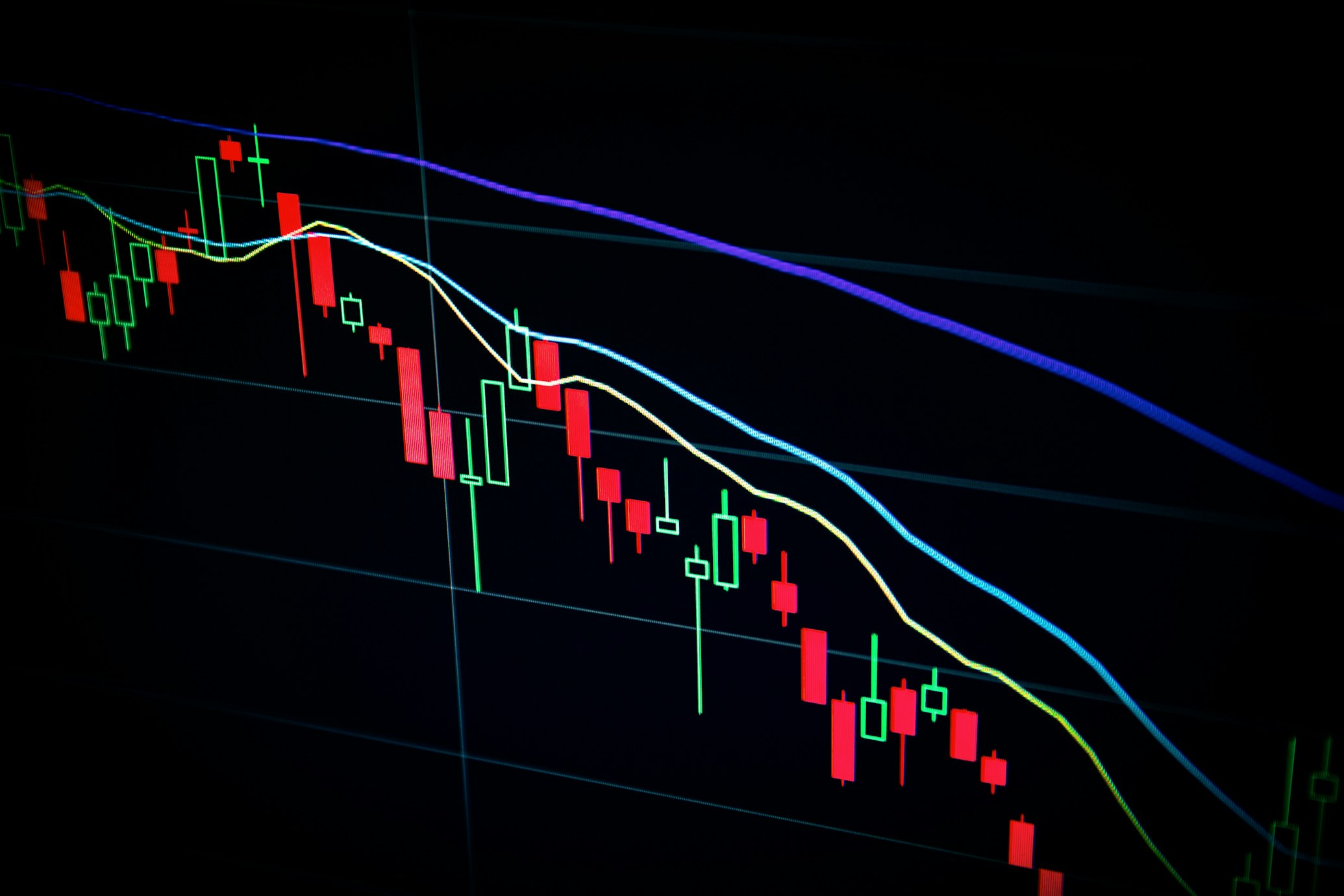
At its core, currency correlation is a statistical measure of how two currency pairs move in relation to each other over a specific period. Because currencies are always traded in pairs (e.g., EUR/USD, GBP/USD), no single pair exists in a vacuum. If the US Dollar strengthens, it doesn't just affect the Euro; it affects the British Pound, the Japanese Yen, the Swiss Franc, and every other currency pegged against it.
The 2026 Reality: In today's algorithmic-driven markets, high-frequency trading (HFT) bots constantly scan for arbitrage opportunities across correlated pairs. When a major news event occurs—such as a Federal Reserve interest rate decision—these algorithms execute thousands of trades across multiple pairs simultaneously, causing them to move in lockstep. For the retail trader, ignoring these correlations is akin to driving blindfolded.
Imagine you buy EUR/USD and simultaneously buy GBP/USD. Because both pairs are heavily influenced by the US Dollar (the quote currency), they tend to move in the same direction. If the US Dollar suddenly strengthens, both EUR/USD and GBP/USD will likely fall. Instead of having two independent trades, you have effectively doubled your risk exposure to the US Dollar. This is the "Correlation Trap" that destroys many beginner accounts.
Professional traders use correlation matrices to visualize these relationships. A correlation matrix is a grid that displays the correlation coefficient between various currency pairs, allowing traders to instantly identify which pairs move together, which move in opposite directions, and which are completely independent.
2. The Mathematics of Correlation: The Coefficient Explained
To utilize currency correlations effectively, you must understand the math behind them. Correlation is measured by the "Correlation Coefficient," a number that ranges from -1.0 to +1.0. This coefficient quantifies the strength and direction of the relationship between two pairs.
+1.0 (Perfect Positive Correlation): This means the two currency pairs move in the exact same direction 100% of the time. If Pair A goes up 1%, Pair B goes up 1%. While a perfect +1.0 is rare in the real world, highly correlated pairs (like EUR/USD and GBP/USD) often exhibit coefficients between +0.80 and +0.95.
-1.0 (Perfect Negative Correlation): This indicates that the two pairs move in the exact opposite direction 100% of the time. If Pair A goes up, Pair B goes down. A classic example is EUR/USD and USD/CHF. Because the US Dollar is the quote currency in one and the base currency in the other, they naturally move inversely. Their coefficient is often between -0.80 and -0.95.
0.0 (No Correlation): A coefficient of zero means there is absolutely no relationship between the two pairs. Their movements are completely independent and random relative to each other. Pairs with coefficients between -0.20 and +0.20 are generally considered uncorrelated.
The Timeframe Factor: It is crucial to understand that correlations are not static. They change based on the timeframe you are analyzing. Two pairs might have a strong positive correlation on a Daily chart over the past year, but a negative correlation on a 5-minute chart over the past hour. In 2026, professional traders use dynamic correlation indicators that adjust in real-time based on the specific timeframe they are trading.
3. Positive vs. Negative Correlations in Action

Let's break down how positive and negative correlations manifest in the real world and how you can use them to your advantage.
Trading Positive Correlations (e.g., EUR/USD and GBP/USD): Because the Eurozone and the UK have close economic ties, and both pairs are quoted against the US Dollar, they often move together. If you see a strong bullish setup on EUR/USD but the chart is messy, you might look at GBP/USD to see if it offers a cleaner entry point. However, you must avoid taking the same position on both pairs simultaneously, as this simply doubles your risk. If you are wrong about the US Dollar, you will lose on both trades.
Trading Negative Correlations (e.g., EUR/USD and USD/CHF): These pairs move in opposite directions. If EUR/USD is in a strong uptrend, USD/CHF is likely in a strong downtrend. This inverse relationship can be used for confirmation. If EUR/USD is breaking through a major resistance level, you should see USD/CHF breaking through a major support level. If USD/CHF is not confirming the move, the EUR/USD breakout might be a "fakeout."
The Hedging Strategy: Negative correlations can also be used for hedging. If you are long EUR/USD and the market starts to turn against you, you could theoretically buy USD/CHF to offset your losses. Because they move inversely, the profit on the USD/CHF trade would cancel out the loss on the EUR/USD trade. However, in 2026, this strategy is highly complex and often incurs double the spread and commission costs. It is generally better for beginners to simply use a stop-loss.
4. The "Commodity Currencies" and Macro Drivers
Currency correlations are not just driven by the US Dollar; they are also heavily influenced by global commodities. Certain countries are major exporters of specific raw materials, and their currencies are intimately tied to the price of those commodities. These are known as "Commodity Currencies."
The Canadian Dollar (CAD) and Oil: Canada is one of the world's largest exporters of crude oil. Therefore, the Canadian Dollar is highly correlated with oil prices. When oil prices rise, the CAD tends to strengthen. If you are trading USD/CAD, you must keep an eye on the oil markets. A sudden spike in oil prices will often cause USD/CAD to drop (because the CAD is the quote currency and is strengthening).
The Australian Dollar (AUD) and Gold/Iron Ore: Australia is a massive exporter of gold and iron ore, much of which goes to China. The AUD is therefore highly sensitive to the price of gold and the economic health of China. A strong Chinese economy or rising gold prices typically leads to a stronger Australian Dollar. The AUD/USD pair often moves in tandem with gold (XAU/USD).
The New Zealand Dollar (NZD) and Dairy: New Zealand's economy is heavily reliant on agricultural exports, particularly dairy products. While less direct than oil or gold, global dairy prices can impact the NZD. More broadly, the NZD is considered a "Risk-On" currency, meaning it tends to strengthen when global stock markets are performing well and investors are feeling optimistic.
The 2026 Macro Environment: In 2026, the transition to renewable energy and the rise of AI have created new macro drivers. Currencies of countries that control critical minerals (like lithium or cobalt) are exhibiting new correlation patterns. A senior analyst must constantly monitor these shifting geopolitical and economic landscapes to understand why correlations are changing.
5. How to Use Correlations for Risk Management

The most critical application of currency correlation is risk management. As a beginner, your primary goal is survival, and understanding correlations is your shield against catastrophic losses.
Avoiding Over-Exposure: The most common mistake beginners make is taking multiple trades that are highly correlated. For example, buying EUR/USD, GBP/USD, and AUD/USD all at the same time. While it feels like you are diversifying across three different trades, you are actually just taking one massive "Short USD" position. If the US Dollar suddenly rallies due to unexpected inflation data, all three trades will hit their stop-losses simultaneously, potentially wiping out a significant portion of your account.
The "Risk Budget" Approach: Professional traders use a "Risk Budget." If your maximum risk per day is 2% of your account, you cannot risk 1% on EUR/USD and 1% on GBP/USD if they are 90% correlated. You must treat them as a single 2% risk. Alternatively, you could risk 0.5% on EUR/USD and 0.5% on GBP/USD to stay within your 1% limit for that specific directional bias.
Diversification through Uncorrelated Pairs: True diversification means trading pairs that have a correlation coefficient near 0.0. For example, trading EUR/USD (driven by US/Eurozone data) and AUD/JPY (driven by Asian markets and risk sentiment). Because these pairs are largely independent, a loss on one is unlikely to be accompanied by a loss on the other due to the same macroeconomic event. This smooths out your equity curve and reduces portfolio volatility.
The 2026 Audit Checklist: Before opening any new position, check your correlation matrix. Ask yourself: "Does this new trade increase my exposure to a currency I am already trading? If the market turns against my primary bias, will all my open positions suffer simultaneously?" If the answer is yes, you must adjust your position sizing or cancel the trade.
6. The Future of Correlation: AI and Algorithmic Trading
As we navigate the markets in 2026, the traditional models of currency correlation are being disrupted by Artificial Intelligence and machine learning algorithms. In the past, correlations were relatively stable and could be relied upon for months or even years. Today, AI-driven hedge funds are constantly analyzing massive datasets, including alternative data like satellite imagery of shipping ports and real-time sentiment analysis of social media, to find fleeting, non-obvious correlations.
Dynamic Correlation Shifts: Because algorithms can process information instantly, correlations can now break down or reverse in a matter of minutes. For example, a sudden geopolitical event might cause EUR/USD and USD/CHF to temporarily move in the same direction as algorithms scramble to rebalance portfolios across different asset classes. This phenomenon, known as "correlation breakdown," is one of the biggest risks for traders who rely on static, historical data.
Cross-Asset Correlations: Furthermore, the lines between different asset classes are blurring. In 2026, we are seeing stronger correlations between traditional fiat currencies and digital assets. For instance, the correlation between the US Dollar Index (DXY) and Bitcoin (BTC) has become a crucial metric for macro traders. When the US Dollar weakens, Bitcoin often rallies as investors seek alternative stores of value. Similarly, the correlation between tech-heavy stock indices (like the NASDAQ) and risk-on currencies (like the AUD) is stronger than ever.
Adapting to the New Reality: To survive in this environment, retail traders must adopt a more dynamic approach. You can no longer rely on a printed correlation matrix taped to your monitor. You must use real-time correlation indicators that calculate coefficients on a rolling basis. More importantly, you must understand the underlying fundamental drivers of these correlations. If you know *why* two pairs are correlated, you will be better equipped to anticipate when that correlation might break down.
Understanding Currency Correlations: The 2026 Professional Guide Quiz
Test your understanding of the concepts covered in this masterclass.
1.What does a correlation coefficient of +0.90 between two currency pairs indicate?
2.Why is it dangerous to buy both EUR/USD and GBP/USD at the same time?
3.Which commodity is the Canadian Dollar (CAD) most strongly correlated with?
📖 Key Terms — Forex Glossary
Not sure about a term?Browse our full Forex Glossary →
Frequently Asked Questions
Expert Answers to Common Queries