IC Markets vs Fusion Markets 2026 — Full Broker Comparison
IC Markets and Fusion Markets are two of the most popular ASIC-regulated ECN brokers for active forex traders — but they target very different priorities. IC Markets offers professional infrastructure, three platforms, and deep liquidity. Fusion Markets offers the lowest commission rates in retail trading ($2.25/side), no minimum deposit, and clean MT4/MT5 execution. We compared both across 30 days of live data to give you a definitive cost-and-quality verdict.
Written By
ForexRater Research Team
Data-driven broker comparison · Independently tested · No paid rankings
Reviewed against our published methodology →Reviews represent the editorial opinion of ForexRater and are not personal financial advice.
Overview: Established ECN Giant vs Ultra-Low-Cost Challenger
IC Markets and Fusion Markets are both Australian ASIC-regulated ECN brokers targeting active forex and CFD traders. Both offer raw spread pricing from 0.0 pips, MT4 and MT5 support, and genuine ECN/STP order routing. But they serve distinct market positions: IC Markets is the professional brand with deep liquidity, co-located servers, and a premium infrastructure — Fusion Markets is the cost challenger offering the lowest commissions in the retail market.
IC Markets consistently ranks as one of the world's largest retail forex brokers by volume, with a client base across 200+ countries and server infrastructure in Equinix NY4 (New York) and LD4 (London). Fusion Markets, founded in 2017, has grown rapidly by targeting experienced traders who want IC Markets-level execution at significantly lower commission rates.
For traders prioritising pure execution quality and brand credibility, IC Markets has the edge. For traders prioritising total cost minimisation on high-volume strategies, Fusion Markets' $2.25/side commission is unmatched. This comparison tests both brokers across spreads, execution, platforms, regulation, and support.
Spreads and Commissions: The Cost Comparison
This is where Fusion Markets wins decisively on paper — but the real-world picture is more nuanced.
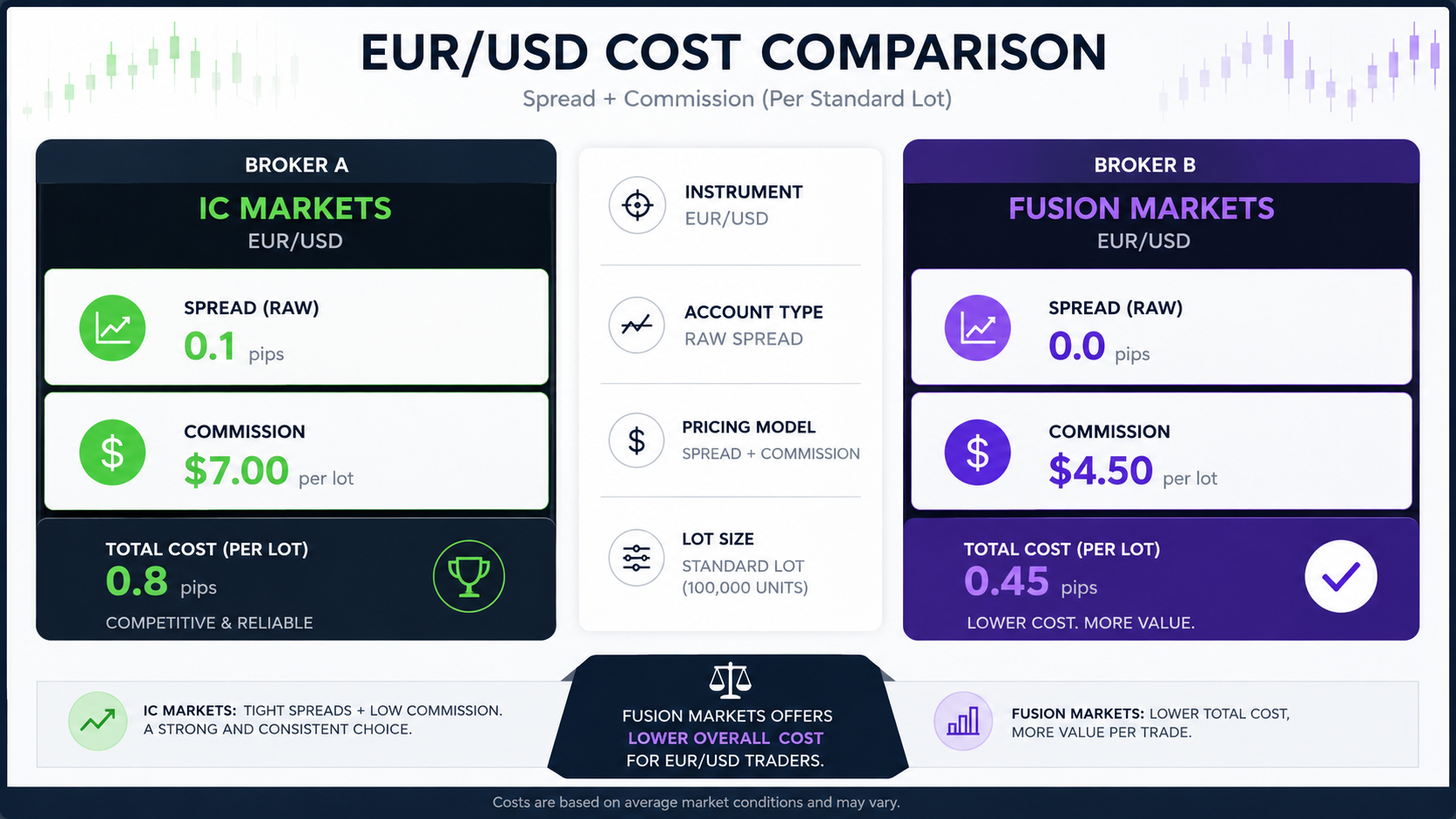
IC Markets Raw Spread Account (EUR/USD): 0.07 pips average spread (30-day live test, London session) + $3.50 commission per side. Total round-trip cost per standard lot: $8.40.
Fusion Markets ZERO Account (EUR/USD): 0.08 pips average spread + $2.25 commission per side. Total round-trip cost per standard lot: $4.66.
The Fusion Markets round-trip cost is 44% lower than IC Markets for EUR/USD. On a trader executing 50 standard lots per month, this represents a saving of approximately $187 per month or $2,244 per year. For high-volume traders, Fusion Markets' cost advantage is material and compounds significantly over time.
For exotic pairs and during off-hours (Asian session, weekends), IC Markets maintains tighter raw spreads — reflecting its deeper liquidity pool. On EUR/USD and GBP/USD during London session peak hours, the spread difference between the two brokers is negligible (1–2 pips difference at most).
Platform and Infrastructure
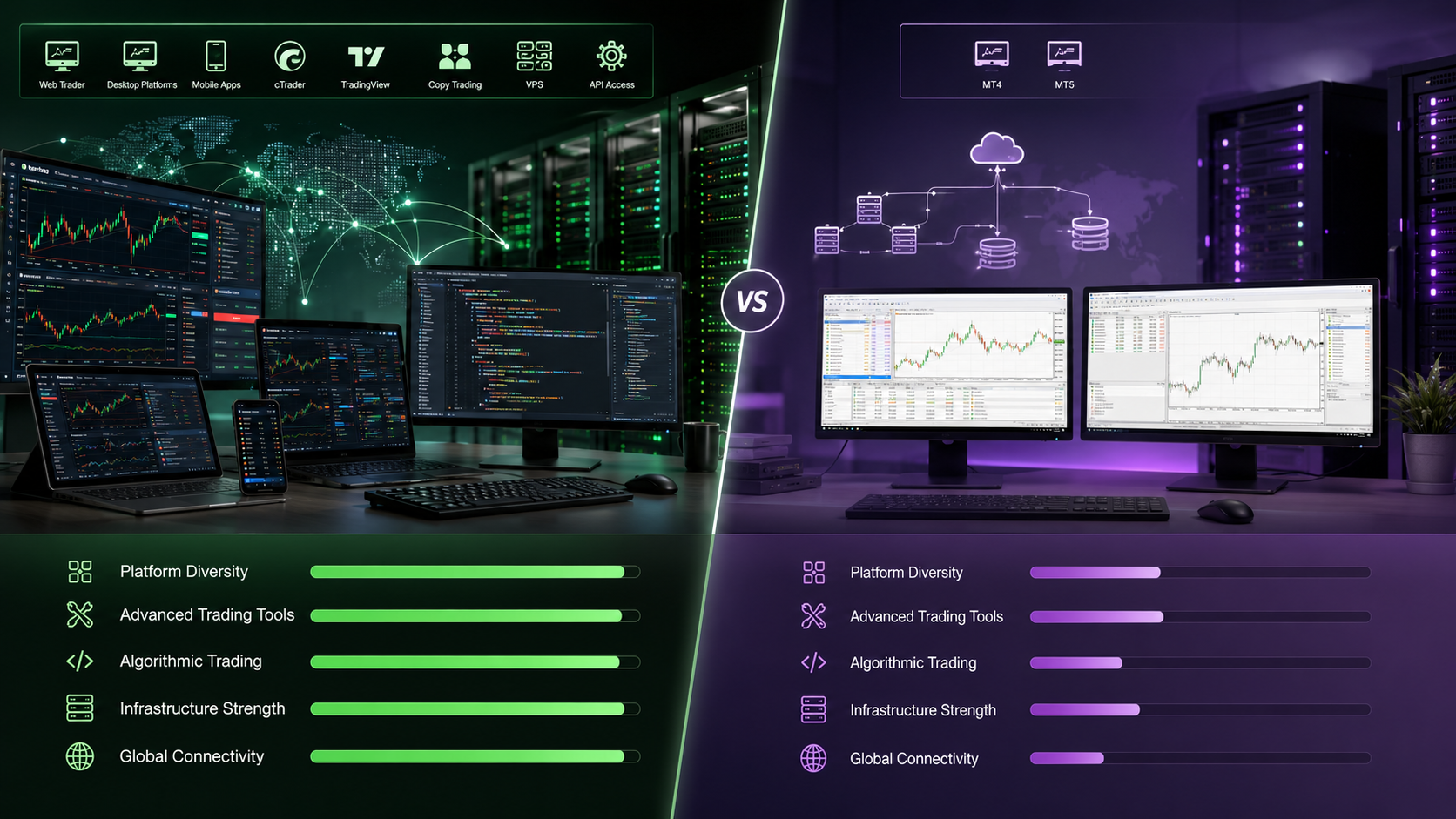
IC Markets: MT4, MT5, and cTrader all supported as first-class platforms. The cTrader integration is particularly well-executed — direct market access, Level II depth of market, and native algorithmic trading support via cAlgo. MT4/MT5 servers are co-located in Equinix NY4 and LD4 for ultra-low latency. IC Markets also supports TradingView via IC Social.
Fusion Markets: MT4 and MT5 supported. No cTrader. No TradingView integration. The platform offering is more limited than IC Markets, which is a notable gap for discretionary traders who prefer cTrader or TradingView charting. However, the MT4/MT5 execution quality is comparable during peak liquidity hours.
For algorithmic traders running Expert Advisors (EAs), both brokers support the full MT4/MT5 EA ecosystem and VPS hosting. IC Markets' lower latency server infrastructure gives it a marginal edge for ultra-high-frequency strategies where microseconds matter.
Verdict on platforms: IC Markets wins clearly on platform diversity and infrastructure depth. Fusion Markets is adequate for pure MT4/MT5 traders but lacks cTrader and TradingView.
Regulation and Fund Safety
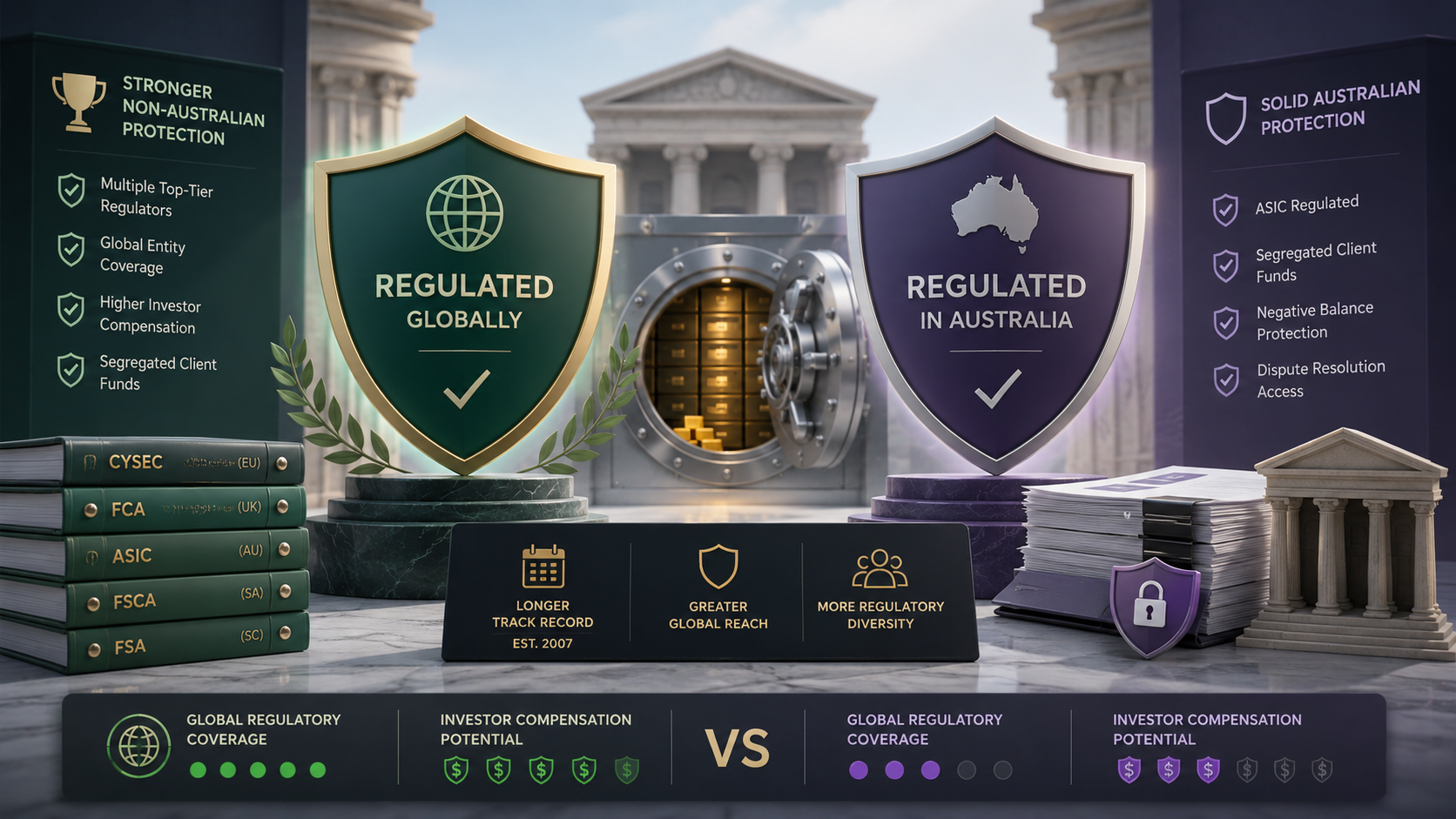
Both brokers hold ASIC licences — the industry benchmark for retail forex regulation in Asia-Pacific. ASIC requires segregated client funds, negative balance protection for retail clients, and compliant risk disclosures.
IC Markets: ASIC (Australia), CySEC (Cyprus/EU), FSA (Seychelles). The CySEC licence means EU-based clients are served under European MiFID II rules with ICF fund protection up to €20,000. IC Markets has been operating since 2007 — 19 years of track record with no significant regulatory incidents.
Fusion Markets: ASIC (Australia), VFSC (Vanuatu). Fusion's offshore entity (VFSC) is significantly less regulated than IC Markets' CySEC alternative — relevant for non-Australian traders who may be routed to the offshore entity. Fusion has been operating since 2017 — a shorter but clean track record.
Fund safety verdict: IC Markets is the safer option for non-Australian traders due to its CySEC licence and longer operating history. Both brokers are safe for Australian-registered clients under ASIC regulation.
Verdict: Which Broker Should You Choose?
Choose IC Markets if: You are an algorithmic trader requiring the lowest possible latency and cTrader ecosystem, you value a longer track record and deeper institutional liquidity, you are based outside Australia and prefer CySEC protection over a Vanuatu offshore entity, or you trade exotic pairs and need consistently tight off-hours spreads.
Choose Fusion Markets if: You are a high-volume retail trader for whom the $2.25/side commission saves material money each month, you run MT4 or MT5 strategies and don't require cTrader, you want a no-minimum-deposit ECN account to test execution before committing capital, or cost optimisation is your primary driver.
For most experienced retail traders trading reasonable volumes, Fusion Markets' cost advantage is the dominant factor — especially for those executing 30+ lots per month. For newer traders, institutional-focused traders, or those requiring cTrader, IC Markets is the more complete package.
IC Markets vs Fusion Markets 2026 — Full Broker Comparison Quiz
Test your understanding of the concepts covered in this masterclass.
1.Which broker has the lower per-side commission?
2.Which broker offers cTrader as a platform?
3.Which regulator provides the strongest non-Australian fund protection?
4.For a trader executing 50 standard lots per month on EUR/USD, how much would they save annually by choosing Fusion Markets over IC Markets?
📖 Key Terms — Forex Glossary
Not sure about a term?Browse our full Forex Glossary →
Frequently Asked Questions
Expert Answers to Common Queries
Is Fusion Markets regulated by ASIC?
Does IC Markets have a minimum deposit?
Which broker is better for scalping?
Can I use TradingView with IC Markets or Fusion Markets?
Which broker has faster execution?
Comparison Methodology
Spread figures shown are broker-published and sampled by our Observatory; see How We Test for methodology. Commission rates sourced from each broker's official fee schedule as of May 2026. We do not accept payment for rankings — all comparisons are independent.