Best CFD & Forex Brokers in Singapore 2026
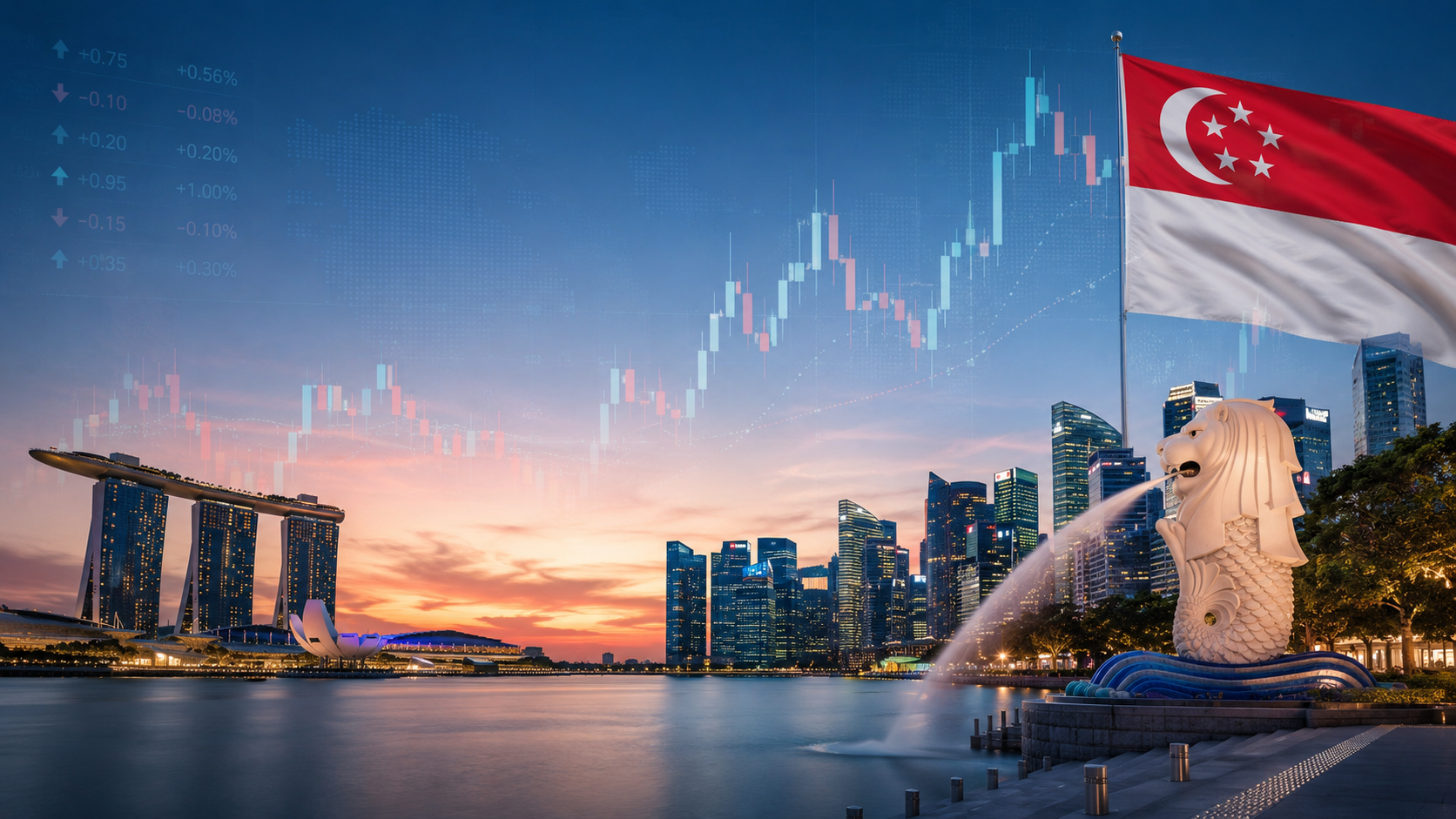
Singapore's financial sector is among the most advanced in Asia — and its retail trading market reflects that sophistication. With no capital gains tax, access to global ECN brokers, and MAS regulation ensuring fund safety, Singapore traders are among the best-positioned retail traders in the world. This guide compares the four best brokers for Singapore traders in 2026 on spreads, regulation, leverage, and Asian-session execution quality.
Written By
ForexRater Research Team
Data-driven broker comparison · Independently tested · No paid rankings
Reviewed against our published methodology →Reviews represent the editorial opinion of ForexRater and are not personal financial advice.
Forex & CFD Trading in Singapore — The Regulatory Landscape
Singapore is one of Asia's most sophisticated financial centres, home to a well-capitalised retail trading market regulated by the Monetary Authority of Singapore (MAS). Unlike the EU's ESMA, MAS does not impose the same blanket leverage caps on retail traders — professional and institutional retail clients in Singapore can access higher leverage, making the market particularly attractive to experienced traders.
MAS licensing requires brokers to hold a Capital Markets Services (CMS) licence and maintain segregated client accounts in Tier-1 Singaporean banks. The regulator actively prosecutes unauthorised firms and publishes a public investor alert list of unregulated entities. Singapore-based traders can also use ASIC-regulated brokers — Australia's regulator is widely accepted as equivalent or superior in enforcement quality.
The Singapore dollar (SGD) is one of Asia's most traded currencies, with USD/SGD among the most liquid pairs available on retail platforms. IC Markets, Fusion Markets, VT Markets, and Vantage all support SGD-denominated accounts or USD accounts with tight spreads on Asian pairs — making them the top choices for Singapore-based retail traders in 2026.

Top 4 Brokers for Singapore Traders in 2026
1. IC Markets — Best Overall for Singapore Traders
IC Markets holds an ASIC licence and is widely accessible to Singapore traders via its global entity. EUR/USD raw spreads from 0.0 pips with $3.50 commission per side. Server co-location in Equinix NY4 and LD4 ensures low latency for Asian-session traders. cTrader, MT4, and MT5 all supported. Minimum deposit: $200. IC Markets is the preferred broker for Singapore-based algo traders and scalpers seeking professional execution.
2. Fusion Markets — Lowest Cost for USD/SGD Pairs
Fusion Markets is ASIC-regulated and available to Singapore traders. EUR/USD spreads from 0.0 pips with a $2.25 commission per side — among the lowest commissions of any retail broker globally. ZERO account requires no minimum deposit. Fusion supports MT4 and MT5 and is particularly popular with cost-conscious Singapore traders who trade high volumes on major and Asian FX pairs.
3. VT Markets — Best for Asian Session Liquidity
VT Markets (VT Global) holds ASIC regulation and is headquartered in Sydney with a strong presence in Southeast Asian markets. EUR/USD spreads from 0.0 pips on its ECN account. VT Markets offers specialised support for Singapore traders including SGD funding options via bank transfer. MT4 and MT5 supported. Strong execution during the Tokyo-London overlap session.
4. Vantage — Best Platform Range for Singapore
Vantage is ASIC-regulated with additional FSCA and CIMA licences. Minimum deposit: $50, making it accessible to retail traders. Vantage supports MT4, MT5, and ProTrader (TradingView-integrated). EUR/USD spreads from 0.0 pips with $3.00 commission per side on its RAW account. Vantage has strong customer service tailored to Asian markets with Mandarin and Bahasa support alongside English.
Leverage Rules for Singapore Traders
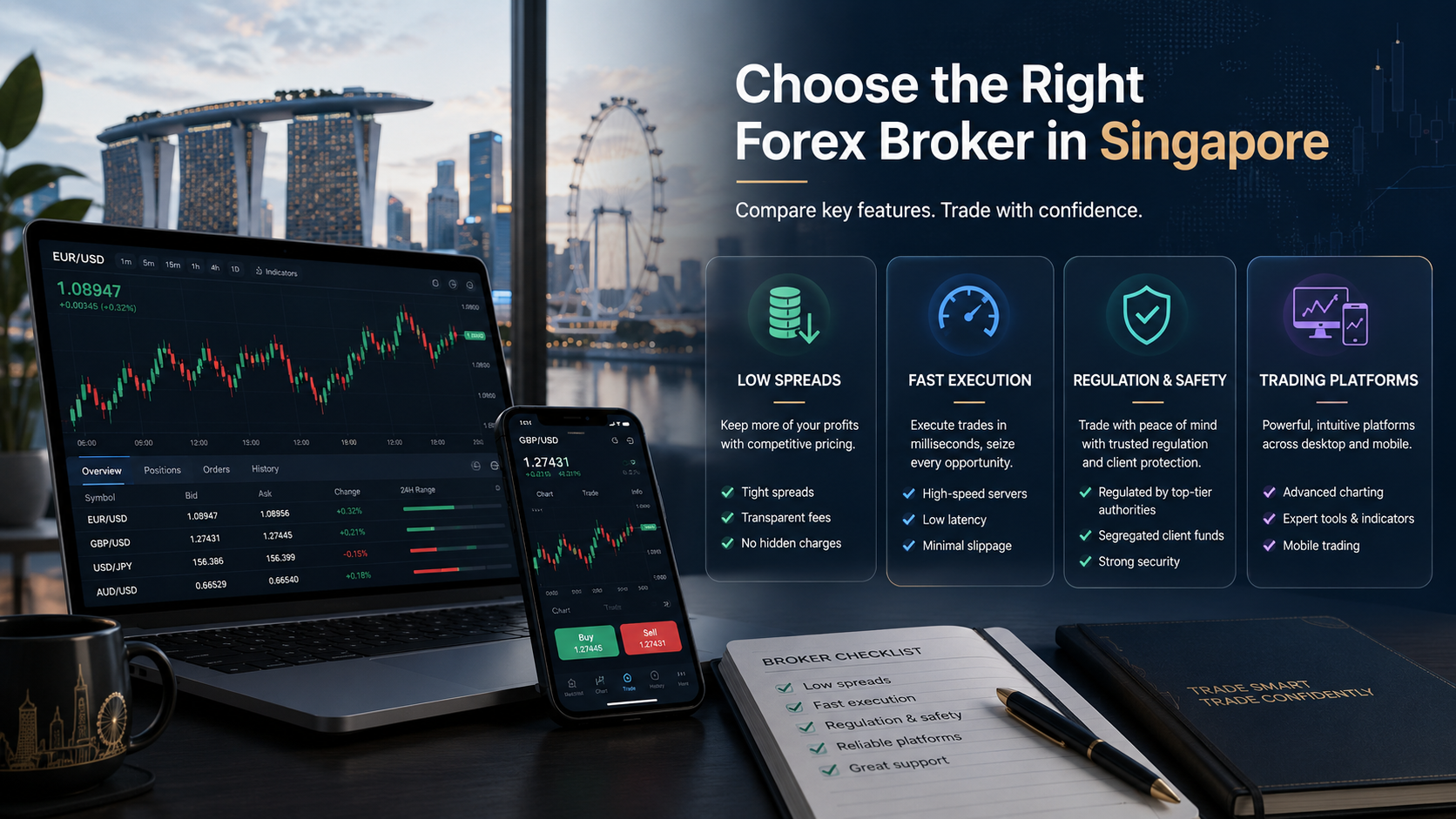
Singapore does not impose the same strict retail leverage caps as the EU (where ESMA limits retail clients to 1:30 on major pairs). MAS-regulated brokers can offer higher leverage to retail clients who meet the requirements for 'accredited investor' status — broadly defined as individuals with net financial assets exceeding SGD 1 million or annual income above SGD 300,000.
For standard retail clients, most Singapore-accessible brokers operate under their ASIC entity for the best leverage-to-regulation balance. ASIC currently permits leverage up to 1:30 for retail clients on major FX pairs — matching EU restrictions — but enforcement is considered more practical for Asian-based traders.
Traders using offshore or non-MAS-regulated brokers can often access leverage of 1:100 to 1:500 on major pairs, though MAS does not encourage this. Singapore's tax authority (IRAS) does not require MAS authorisation for trading activity, but traders should ensure their broker holds a reputable regulation (ASIC, FCA, or CySEC) for fund safety.
USD/SGD and Asian Pair Trading Conditions
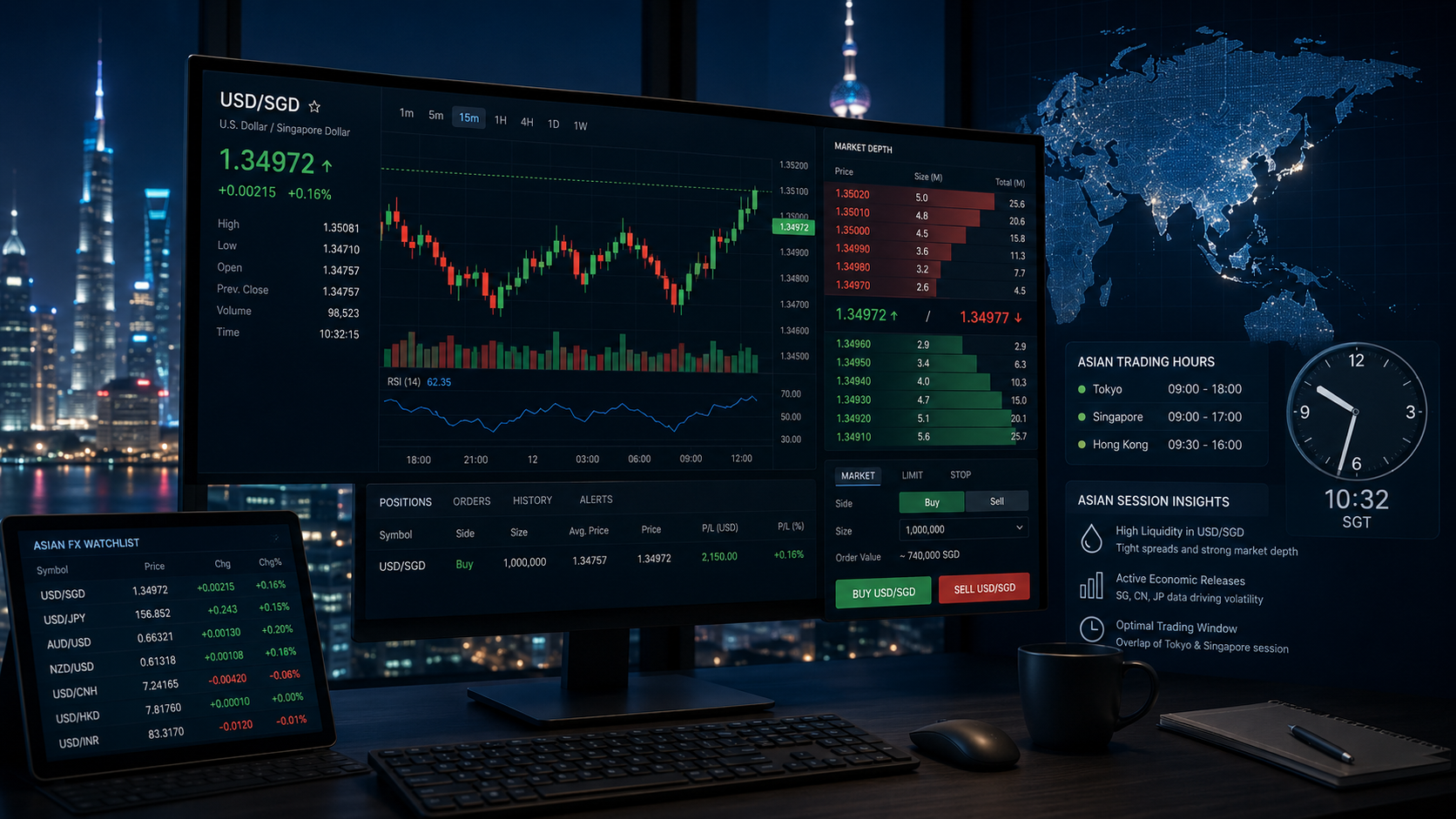
The Singapore dollar pairs most traded by retail clients include USD/SGD, EUR/SGD, AUD/SGD, and GBP/SGD. All four of the recommended brokers offer USD/SGD, though spreads vary significantly. IC Markets typically offers USD/SGD spreads from 2–4 pips during liquid Asian session hours — competitive for a minor pair. Fusion Markets and VT Markets offer similar conditions.
For traders focused on USD/JPY, AUD/USD, and NZD/USD — pairs highly correlated with Singapore's trading economy — all four brokers provide tight ECN spreads from 0.0 pips on their raw/commission accounts. The Tokyo session (1:00–9:00 SGT) offers the best Asian pair liquidity, with the Singapore overlap from 9:00–16:00 SGT providing the most volume for SGD crosses.
Gold (XAU/USD) is extremely popular with Singapore traders due to cultural affinity with the asset. IC Markets and VT Markets both offer gold spreads from 0.15–0.30 pips on raw accounts — some of the most competitive in the retail market. Fusion Markets' gold spreads average 0.20 pips, while Vantage runs at 0.25 pips on its RAW account.
Tax Treatment of Forex Profits in Singapore
Singapore is widely regarded as one of the most tax-friendly jurisdictions for traders globally. The Inland Revenue Authority of Singapore (IRAS) does not levy capital gains tax — meaning profits from forex and CFD trading are generally not subject to income tax for individuals who trade on a personal account basis.
The key distinction IRAS draws is between capital gains (not taxable) and income from a business activity (taxable). If trading is your sole or primary source of income, IRAS may classify it as business income subject to corporate or individual income tax. Most retail traders who hold day jobs and trade as a secondary activity are not subject to tax on trading profits.
GST (Goods and Services Tax) does not apply to forex and CFD trading profits. Brokers operating under Singapore's financial services GST rules are exempt providers. Traders should consult a Singapore-qualified tax advisor for their specific situation, particularly if trading activity is significant in scale or frequency.
Best CFD & Forex Brokers in Singapore 2026 Quiz
Test your understanding of the concepts covered in this masterclass.
1.Which regulator oversees forex brokers in Singapore?
2.Are forex trading profits subject to capital gains tax in Singapore?
3.Which of these brokers is headquartered in Australia and accepts Singapore traders?
4.What does 'accredited investor' status allow Singapore traders to access?
📖 Key Terms — Forex Glossary
Not sure about a term?Browse our full Forex Glossary →
Frequently Asked Questions
Expert Answers to Common Queries
Is forex trading legal in Singapore?
Which brokers are MAS regulated?
What leverage is allowed in Singapore?
Do I need to pay tax on forex profits in Singapore?
Which broker has the lowest spreads for SGD pairs?
What is the best trading broker in Singapore?
Which broker has the lowest fees in Singapore?
Which trading app is best for beginners in Singapore?
Is $100 enough to start trading in Singapore?
Which broker is the safest for Singapore traders?
How much money do I need to start trading forex in Singapore?
Who are the biggest forex brokers in Singapore?
Can I make $1,000 per day from forex trading?
Testing Methodology
Spread figures shown are broker-published and sampled by our Observatory; see How We Test for methodology. Regulation data verified against MAS, ASIC, and FCA public registers. Tax guidance sourced from IRAS official publications and is general in nature — consult a Singapore-qualified tax advisor for personal advice.