Best CFD & Forex Brokers in Norway 2026
Norway is one of the world's wealthiest nations per capita — backed by oil revenues and a sovereign wealth fund of $1.7 trillion. Norwegian retail traders benefit from a well-regulated EEA financial environment, a strong NOK closely tied to oil prices, and access to the best ASIC-regulated ECN brokers. This guide compares the four best brokers for Norway-based traders in 2026 on spreads, NOK pair availability, regulation, and tax treatment.
Written By
ForexRater Research Team
Data-driven broker comparison · Independently tested · No paid rankings
Reviewed against our published methodology →Reviews represent the editorial opinion of ForexRater and are not personal financial advice.
Forex & CFD Trading in Norway — Finanstilsynet and EEA Rules
Norway is a member of the European Economic Area (EEA) and adopts EU financial regulations, including MiFID II and ESMA's leverage restrictions for retail traders. The Norwegian financial regulator, Finanstilsynet (the Financial Supervisory Authority of Norway), enforces these rules across the country's financial services sector and maintains a public register of licensed investment firms.
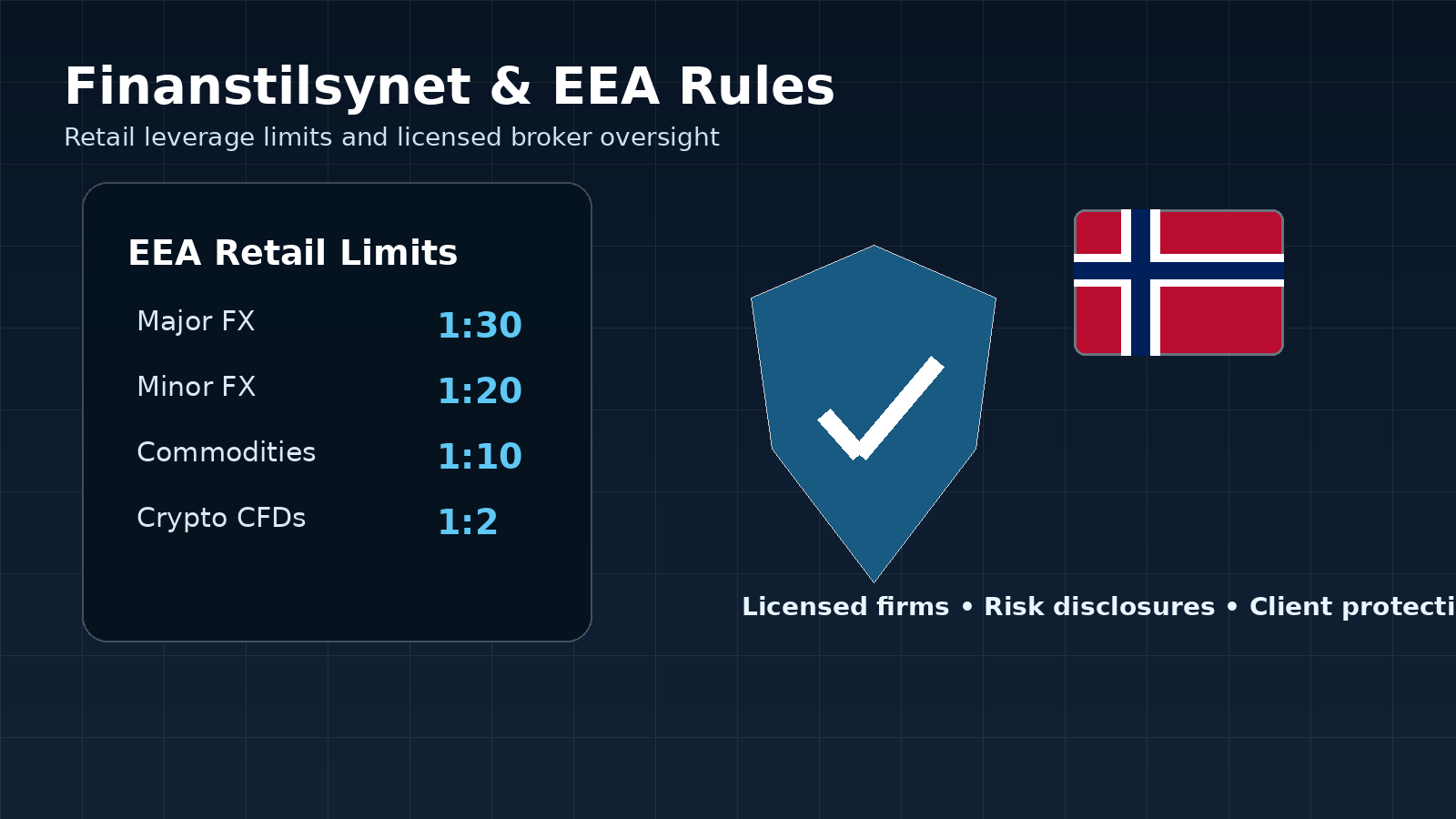
Under EEA rules, retail traders in Norway are subject to ESMA leverage limits: 1:30 on major forex pairs, 1:20 on minor pairs, 1:10 on commodities, and 1:2 on cryptocurrencies. This mirrors the restrictions imposed on EU retail clients. Professional client status — which allows higher leverage — is available to traders meeting two of three criteria: 10+ transactions per quarter of significant size, financial instrument portfolio exceeding €500,000, or relevant professional experience.
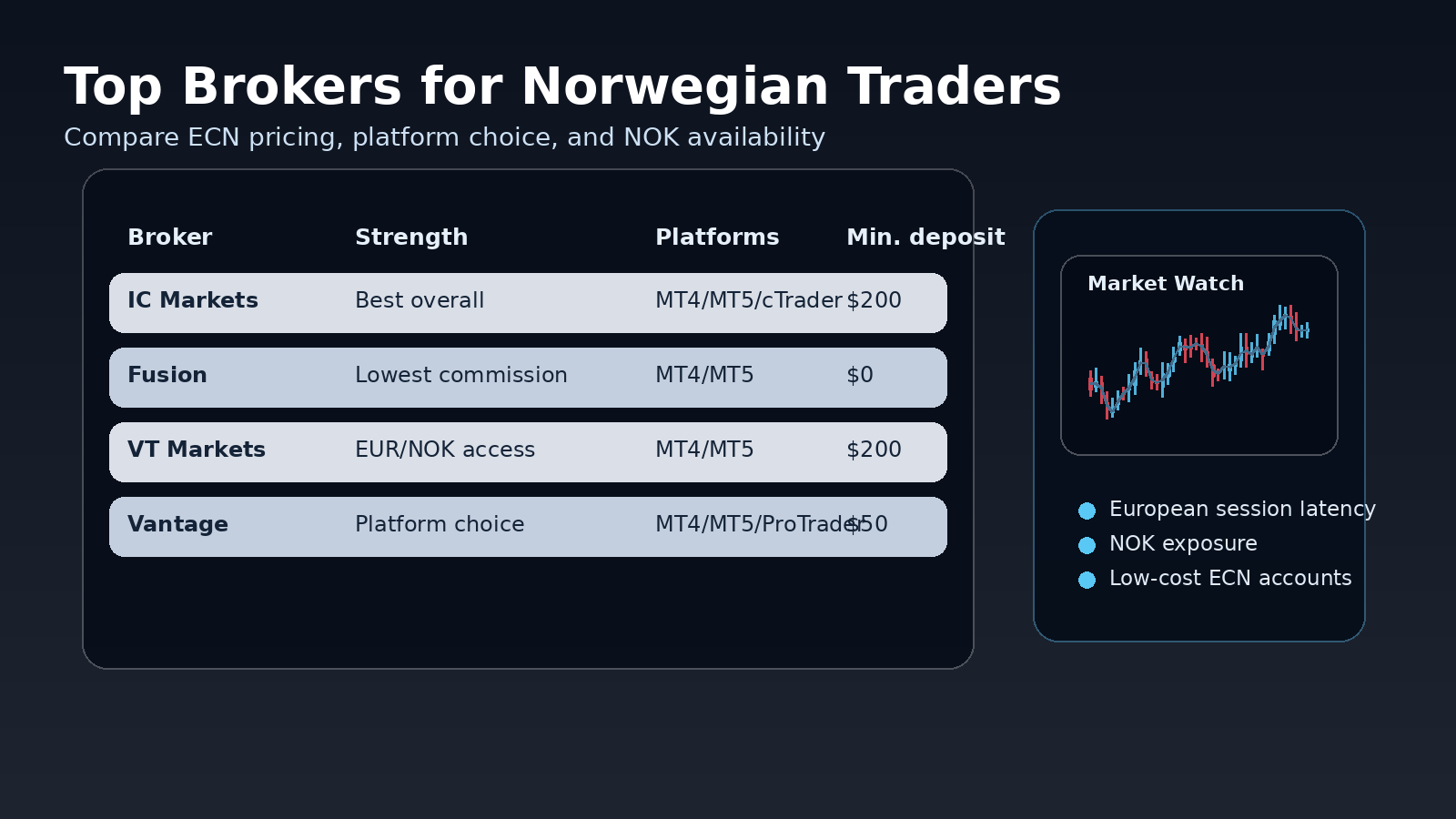
Most Norwegian retail traders access ASIC-regulated brokers, which offer better leverage for retail clients (up to 1:30 on major pairs) while maintaining strong regulatory standards. IC Markets, Fusion Markets, VT Markets, and Vantage are all accessible to Norwegian residents and represent the best ECN options available in 2026.
Top 4 Brokers for Norwegian Traders in 2026
1. IC Markets — Best Overall for Norwegian Traders
IC Markets is ASIC-regulated and accessible to Norwegian residents. EUR/USD raw spreads average 0.0–0.1 pips with a $3.50 commission per side. Server co-location in Equinix LD4 (London) ensures excellent European session latency for Norwegian traders — particularly important for those in Oslo who trade during the Nordic overlap session. MT4, MT5, and cTrader supported. Minimum deposit: $200.
2. Fusion Markets — Lowest Commission Cost
Fusion Markets charges $2.25 per side on its ZERO account — the lowest commission among any major ASIC-regulated broker. EUR/USD raw spreads from 0.0 pips. No minimum deposit on the ZERO account. MT4 and MT5 supported. Fusion is particularly attractive for Norwegian traders executing high-volume strategies where minimising per-trade costs is paramount.
3. VT Markets — Strong European Liquidity
VT Markets is ASIC-regulated and offers ECN raw spreads from 0.0 pips. EUR/NOK is available on the platform, making it useful for traders seeking NOK exposure without a currency conversion. MT4 and MT5 supported. VT Markets has competitive European session execution via its Sydney and London server network. Minimum deposit: $200.
4. Vantage — Best for Platform Choice
Vantage is ASIC, FCA, and FSCA regulated. Minimum deposit of $50 — the lowest among the top four. MT4, MT5, and ProTrader (TradingView-integrated) supported. EUR/USD raw spread from 0.0 pips with $3.00 commission per side. Vantage's TradingView integration makes it popular with Norwegian traders who use TradingView as their primary charting environment.
NOK Pairs and Nordic Market Conditions
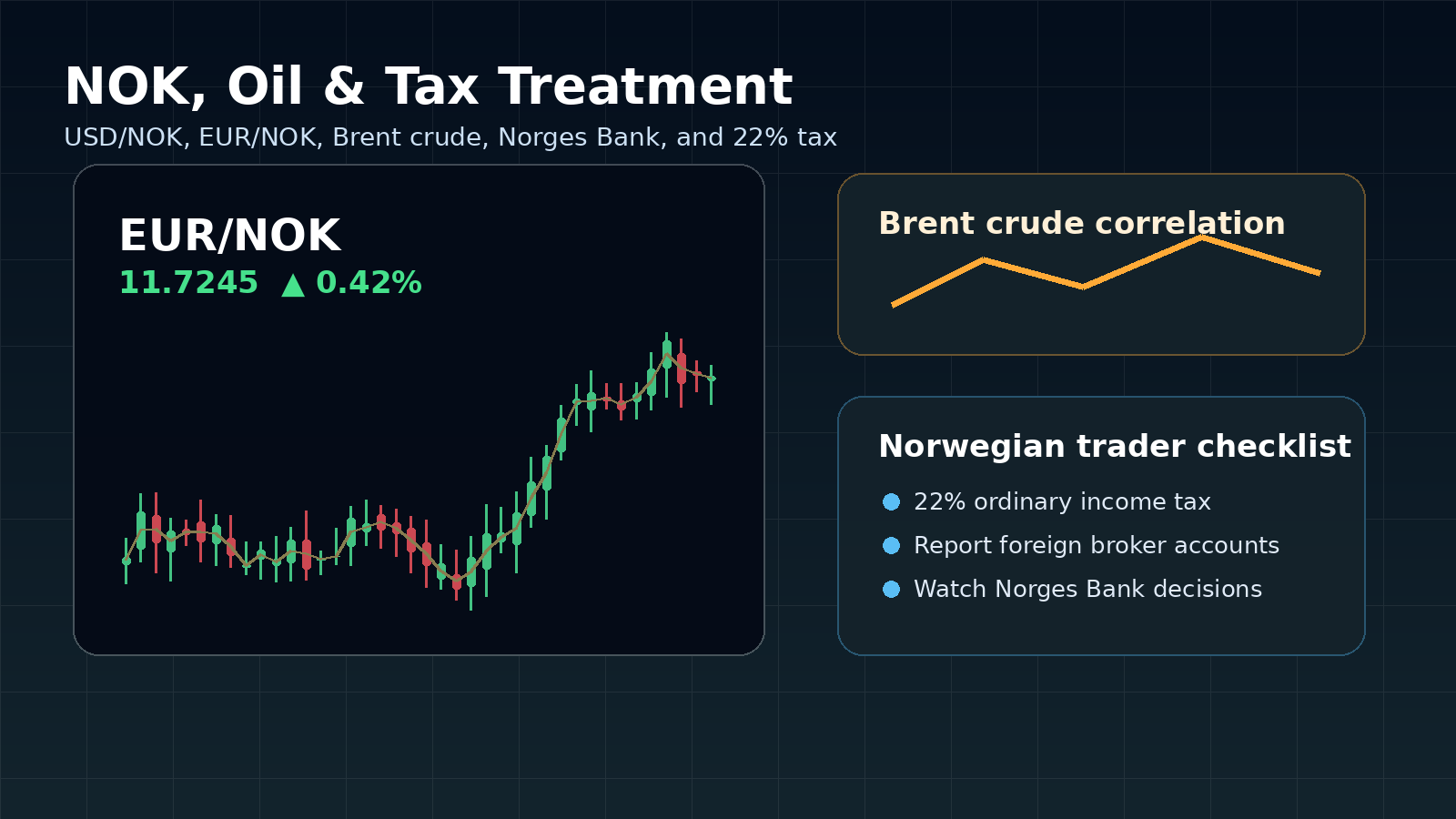
The Norwegian krone (NOK) is one of the most oil-sensitive currencies in the FX market. USD/NOK and EUR/NOK are the primary NOK pairs available on retail platforms. NOK movement is tightly correlated with Brent crude oil prices — Norway is Western Europe's largest oil producer and the world's third-largest natural gas exporter.
Norges Bank (the Norwegian central bank) sets monetary policy independently of the ECB, which can create EUR/NOK divergence during periods of differing economic conditions. Norges Bank meetings occur eight times per year, and rate decisions can trigger 200–500 pip moves in EUR/NOK during volatile announcements.
During the European session (08:00–16:00 CET), EUR/NOK spreads at IC Markets and VT Markets typically range from 8–15 pips — relatively wide compared to major EUR pairs, reflecting the lower liquidity of minor pairs. USD/NOK shows similar characteristics. Norwegian traders should factor this into their cost calculations when trading NOK pairs frequently.
Tax Treatment of Forex Profits in Norway
Norway taxes forex and CFD trading profits as ordinary income (alminnelig inntekt) at a flat rate of 22%. There is no separate capital gains tax rate — all investment income is subject to the same 22% rate. For Norwegian residents, this applies to profits realised from forex, CFDs, and other financial instruments regardless of the broker's domicile.
Losses from forex and CFD trading can be offset against other income, providing a degree of tax efficiency for active traders with a mixed trading record. Norway does not impose transaction taxes or stamp duty on FX trades. Reporting obligations require traders to disclose foreign broker accounts and income on their annual tax return (Skattemelding).
Norway's Skattetaten (Tax Administration) has increasingly focused on undeclared foreign financial accounts. Norwegian traders using offshore-registered brokers should ensure they comply with reporting obligations. All four recommended brokers are reputable and operate under established regulatory frameworks, reducing compliance risk.
Norges Bank Policy and Oil Correlation
Norway's fiscal position is unique globally — the Government Pension Fund Global (GPFG), the world's largest sovereign wealth fund at approximately NOK 19 trillion ($1.7 trillion), is funded by Norwegian oil revenues. The fund's management by Norges Bank Investment Management (NBIM) means Norwegian monetary and fiscal policy is deeply intertwined with global energy markets.
For forex traders, the key NOK drivers are: Brent crude oil prices (highest correlation), Norges Bank interest rate decisions, Norwegian CPI releases, and global risk sentiment. NOK tends to weaken during global risk-off events and strengthen when oil prices rise. In 2025–2026, Norway's energy sector remained a significant driver of NOK performance amid Middle East supply disruptions.
All four recommended brokers publish economic calendar data that includes Norges Bank meeting dates. EUR/NOK is typically most volatile within 30 minutes of a Norges Bank announcement — traders should widen stops and reduce position sizes during these windows.
Best CFD & Forex Brokers in Norway 2026 Quiz
Test your understanding of the concepts covered in this masterclass.
1.Which regulator oversees financial markets in Norway?
2.What is the Norwegian income tax rate on forex trading profits?
3.Which commodity most heavily influences the Norwegian krone (NOK)?
4.What maximum leverage is available to Norwegian retail traders under EEA rules?
📖 Key Terms — Forex Glossary
Not sure about a term?Browse our full Forex Glossary →
Frequently Asked Questions
Expert Answers to Common Queries
Is forex trading legal in Norway?
How are forex profits taxed in Norway?
What drives the Norwegian krone (NOK)?
Can Norwegian traders access higher leverage?
Which broker is best for trading EUR/NOK and USD/NOK?
Testing Methodology
Spread figures shown are broker-published and sampled by our Observatory; see How We Test for methodology. Regulation data verified against Finanstilsynet, ASIC, and FCA public registers. Tax guidance sourced from Skatteetaten (Norwegian Tax Administration) official publications and is general in nature — consult a Norwegian-qualified tax advisor for personal advice.